Shannon Detective Service, Inc.


Toll Free: 877-341-3377 •  
E-mail: info@shannondetectiveservice.com

Arizona, New Mexico, California, Washington, Oregon, Idaho & MontanaLicensed And Bonded In All Western United States

Insurance Fraud Specialists

877-341-3377 

Arizona, New Mexico, Colorado, Utah, Wyoming, Idaho, Montana, Washington, Oregon, California, Alaska all of the USVI and soon Florida 


 Available

        24 / 7

Things to Look for When Hiring a Private Detective Agency

Missing Persons Accolades


Hard to find subjects:

Shannon Detective Service has a proven history and reputation for handling these types of cases. For example, the Heather Rakos case in which a young teenage girl went missing in Banning, CA in 1993 and the local police department had exhausted their leads therefore the family hired Gregg Shannon to find her. In 1995 she was found by Gregg Shannon in Flores Magon, Mexico and reunited with her family. The abductor was also located by Gregg Shannon and later arrested by the Mexican authorities on behalf of the requests of the FBI, extradited to the US, prosecuted by the US Attorney General in Federal court, found guilty and was sentenced to 10 years in prison. 

In 2010 Gregg Shannon was hired to locate a family member who was reported missing for over five years with the King County Sheriff Office of Washington State.  Gregg Shannon had discovered the missing person had actually committed suicide in neighboring Pierce County in August 2005 however the family was never contacted nor was the death certificate filled out properly by the Pierce County Coroner leaving the decedent's family unaware of the tragedy.  This resulted in thousands of dollars of unclaimed money to lie in both the Pierce County & WA State coffers until Gregg Shannon discovered it and was able to secure its release for the client. 

Conducting Surveillance


Tailing the subject after their medical appointment:

Agencies that tell you they prefer to tail their insurance / disability fraud subjects after a medical appointment when no physical addresses are provided by the client probably don’t have the ability to locate hard to find individuals. If you hear this, be wary. Most subjects have been warned by their attorneys that investigators are likely to follow them from their appointments. This tactic is unlikely to yield the results you seek and can further be exacerbated by the claimant orchestrating the injury.

Losing the subject in traffic:

Some agencies try to get away with billing you for useless surveillance by presenting reports that say "due to heavy traffic conditions, the subject was lost."  Shannon Detective Service does not condone this practice nor do we charge for loosing subject's under surveillance.  An agency using "state-of-the-art" surveillance equipment should be able to eliminate this by using GPS tracking devices. 

Capturing Video


Capturing court-quality video: 

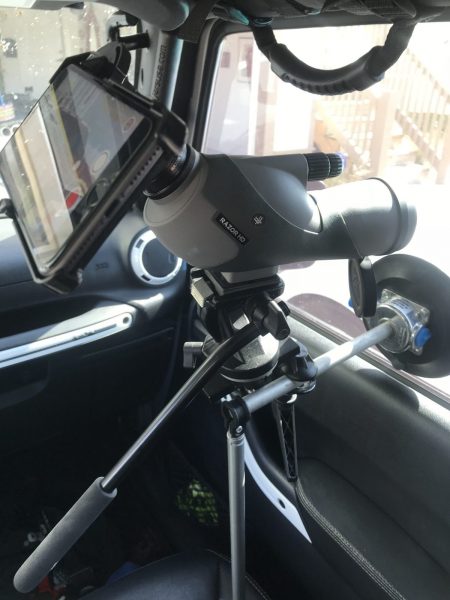
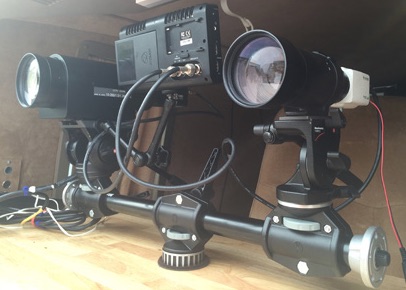
Think about the surveillance video you’ve received in the past. Was it shaky, out-of-focus, over or under-exposed? Did the video contain multiple people making it hard to identify the subject? If so, then the investigator probably was unable to make a positive I.D. hence they video taped all of the indivuduals in the area.  Did the investigator have command of the camera while using it in the manual focus mode as opposed to auto focus mode to prevent distortions caused by objects coming between the camera and the subject?  Is the equipment used by the detective agency actually "state-of-the-art" as most claim or older outdated equipment used?  Are their cameras and technology used actually consumer or prosumer quality based since your results depend on it?  Is the detective agency you deploy capeable of performing surveillance at night and obtaining quality video with night vision equipment to enhance your chances of securing evidence?  The majority of detective agencies working insurance related claims obtain video only during the day light hours limiting them from securing video on claim wise subjects who participate in evening activity.   

Capturing video on almost every case:

Another common issue in the industry is that many detective agencies claim to obtain video on most every case and capture a significant amount of video of the subject but when you review the video you see little or no evidence of anything that will help you refute the subject’s alleged injury claims.

Getting a positive identification of the subject:

Is your investigator able to make a positive I.D. of the subject so that valuable surveillance hours are not wasted video-taping the wrong subject and then charge you for this service? Do your reports include clear, easily identifiable still photos of the subject under investigation? If your investigator hasn’t reported making a positive I.D. of the subject, chances are the investigator is not completely sure of the identity of the person – although he probably won’t tell you that.

Working Intelligently


Creating a strategy:

How do you know if the agency you hire will work your case efficiently and intelligently?  For example, some agencies conduct activity checks by performing neighborhood canvasses and contacting neighbors overtly to gather information about the subject.  This will ultimately make future surveillance nearly impossible since the neighbors are likely to contact the subject regarding the investigator's inquisition if a suitable pretext isn't used.  Hence the subject becomes leery and may even contact the adjuster or client to complain that he or she was a target of an investigation.       

A reputable agency should start each case by gathering as much pre-intelligence information as possible to help make a productive surveillance, aside from DMV searches, to obtain critical information on their subject.  This should include an internet search to find any relationship of your subject with regards to any organizations, clubs, newspaper articles, web businesses, social media affiliations, professional licenses, fictitious and corporate business licenses and affiliations.  Social security number searches & verifications should be performed through reliable data bases to verify the subject and their physical residence including cell and home phones before starting a surveillance to be efficient in saving the client time and money.  Since most agencies do not perform such pre-intelligence gathering and dispatch their investigators to addresses given to them by their clients they often experience old or non existing addresses for their subjects under investigation.  Some insurance related clients rely on ther own itelligence gathered from index bureaus and other insurance related databases which can be limited due to the information supplied and collected are not always reported by all insurance related businesses.  Some domestic related clients use only web based screening companies that exclude or have outdated information.  Full background investigations using multiple databases can reveal pertinent information leading to claims being denied when pre-existing claims are discovered or information not detected by domestic related clients are uncovered.  Upon completion of an assignment, a detective agency should be able to find out if a subject is actively employed while receiving disability compensation, even if they're being paid in cash.  If the detective agency can't gather this type of information, then you're not dealing with an agency using experienced investigators.  

Locating hard-to-find subjects:

What do you do when you discover your subject has moved and has not left a forwarding address? Or no one knows where your subject is at all? Ask if your agency has the know-how to re-locate the subject without subcontracting out to another agency that specializes in locates or missing persons.

Outsmarting the subject:

Agencies that proudly proclaim that their investigators are trained “to observe and report what they see” are employing robots, not experienced investigators. Experienced professionals are skilled at putting themselves in their subject’s shoes in order to outsmart them at their own game. This allows the investigator to capture the subject doing and saying things they intended to hide. The investigator should always report what he or she sees, however a better investigator can extract information that cannot be observed and is useful to your case.

Verifying there really is “no activity”:

For insurance-related cases, does your investigative agency dig into and confirm information pertinent to the case? For example, do they tell you if the subject is in the US illegally, if he is running a business from home, or if the subject holds a professional business license (and if so, if it’s legitimate)?

It’s not uncommon for investigative agencies to conduct surveillance and submit a report saying “no activity was observed”. How do you know if that’s really the whole story or if the subject just appears inactive when in fact the subject is quite active running a business from home? If your investigators do not substantiate “no activity” then you don’t really know what’s going on.  And neither do they!

Integrity


Evidence gathering:

The detective agents’ code of ethics is to collect and report objective data – facts – that can be used in decision-making. Whether the facts support or refute the case is supposed to be irrelevant.

It might surprise you to know that some agencies award bonuses to investigators who capture incriminating video.

At times this can lead an investigator to overlook evidence pertinent to the case in favor of evidence that will prove financially rewarding. This can lead to applicant’s accusing the agency hired to represent the defense as manufacturing evidence.

At Shannon Detective Service your needs come first and the only incentive necessary is closing a case and keeping our clients satisfied.

Credentials


Defining experience:

Be cautious about agencies that claim “more than 30 years of investigation experience” or something similar. This often means that the collective experience of all the investigators in the agency is 30 years (i.e. 10 investigators with 3 years experience each yields 30 collective years).

Experience is only useful when personally achieved. Don’t be fooled by these tactics; make sure the detectives working your cases have 8-10 years (or more) of personal experience conducting investigations.

Hiring former police officers / federal agents / law-enforcement professionals

People with experience in law enforcement fields often work as private detectives by positioning their former careers as "the same type of work."  With the exception of auto accident reconstruction and arson investigators, it is simply not true.  Private detectives have different resources and different protocols than these professionals – and no authority to demand information.

In fact, law-enforcement professionals who are used to having authority find themselves at a disadvantage without it.

Did you know that many law enforcement officers dabble in private detective work because it's something they can do part-time while receiving a pension, a disability or insurance award?

Sound like a good gig?  It is, at least for the officers.  But not for the insurance companies and people that hire them.

Dabbling can lead to disaster:

Dabbling means they haven't handled enough cases to know the ins-and-outs of the industry the way career professionals do.  In fact, ex-law enforcement officers are known for negatively impacting insurance-related cases as a result of their inexperience in this field.

Shady Practices


Large agencies:

Some large and medium-sized investigative agencies that started out as smaller or independent agencies have opted to market for growth over quality investigations. To make this profitable, they hire inexperienced investigators in a multitude of states and provide very little field supervision which may include sub contracting work in remote geographic areas to the least expensive investigator to optimize profits. Unfortunately, this financially driven strategy is leading clients to hire investigative services on price and geographic coverage rather than expertise.  Some of these nationwide vendors have even expanded into offering SIU compliance services for self insured's and TPA's to meet there state requirements.  Thus allowing them to monitor and manage the hiring of investigative services for their clients in an attempt to monopolize and control the industry by price fixing and forcing the competition to compete at rates experienced 20 years ago.

Self insured corporations that hire a TPA (third party administrator) service to administrate their work related claims should be aware that the TPA may act as a broker when hiring inexperienced detective agencies that charge less thus allowing the TPA to profit more by marking up the cost of their cheaper priced services that ultimately cheats their client from obtaining quality service.

Contracted rates:

There is another trend that appears to be accelerating with regards to some private insurance and government agencies are engaging in. They dictate a rate in a contract at a much reduced hourly rate or use an all inclusive daily rate far less when compared with the current rates charged by experienced agencies. This has adversely affected agencies from keeping experienced investigators employed or at least working on these accounts that have these types of contracts. Keep in mind every case is different and some cases may need the use of databases to locate a subject before performing the surveillance or an investigator may need to run court records after learning a subject had a pre-existing condition as a result of the investigation. This may not allow an agency to stay within the financial guidelines set forth in the contract at the fixed rates. They lose sight of other incriminating evidence that could have been collected outside of just surveillance. Furthermore it appears most insurance companies and large government insurance agencies are experiencing deficits in these hard economic times and are opting to control some of their expenditures by controlling outside investigation costs. These budgets need flexibility to be able to combat a spike in fraudulent cases that may occur in these bad economic times. However there is no way to actually measure the insurance company’s savings regarding a loss due to fraudulent claims if no investigation was performed that could have reduced the loss. Auto Insurance carriers have estimated that at least 20 % of their premiums are a result of fraudulent claims. Keep in mind better qualified investigators should be able to detect fraud that may have been over-looked by less experienced investigators working for some these conglomerate detective agencies.

Referral services:

Be wary of investigative brokers that offer a referral service to the public, including the insurance industry.  Some of these brokers have no actual experience or lack expertise in the Private Detective field. 

Internet locates: Be cautious of Internet search companies that offer to locate someone for a flat fee. They use a limited amount of information gathered from public sources while providing information that is usually outdated and generic, at best.

Licensed Private Detectives, like Shannon Detective Service, have the tools and the know-how to provide a thorough, detailed investigation that search companies simply cannot compare to.  This is because licensed private detectives have access to social security numbers and other pertinent information from reliable databases that are not available to the general public.   

Choosing the right service for your needs:


Some detective agencies may use the terms you're not familiar with when discussing your case, but Shannon Detective Service is clear about all its methods, tactics and approaches and wants you to understand them well. 

When hiring an agency to perform investigations clients can be deceived into using "screening companies" that advertise their services.  These "screening companies" often refer to themselves as "information brokers" and use deceptive language to shirk regulations that that require private detective's license in the state where they are located.  Some of these businesses avoid regulations completely by operating in states that do not have an avenue to seek retribution from dishonest or inexperienced businesses performing background investigations through a state's regulatory board.  This is can also be evident in in the rise of recent background companies advertising on TV and the internet listing only toll free phone numbers and omitting any physical address to avoid licensures/bonds and other regulations associated with private detectives who offer the same service but with better skill sets.  These businesses only provide a limited search of public information to the client and have large disclaimers to limit their liability.

Unlike "screening companies" or "information brokers" Shannon Detective Service is a reliable, fully licensed company with years of expertise in the field.

Background Investigations

  • Background Investigations can be full or partial, depending upon the scope of the information the client needs.
  • Pre-employment background investigations should have clients supplying the agency with a signed release from the applicant in order to obtain a credit report, birth certificates or other information such as worker’s compensation records that some states will not release without one, such as Nevada and New Mexico.
  • Private detective agencies relying solely on one database company for information are often inaccurate since no one database company can accurately offer all necessary background information on an indivudual.  They miss public information at times that was available yet not collected or duplicate inaccurate information as a re-seller.  This is due to their inability to frequently update their databases or fail to collect data from small municipalities who only offer information to the public through a manual search. 
  • Federal, state, county and city court records need to be checked manually at times to be thorough including vital information that can at times only be extracted by having the actual file pulled and reviewed.  Shannon Detective Service will investigate everything from county recorder information to federal court records to prison records to hunting and fishing licenses in order to provide the most thorough and up-to-date information.

AOE/COE Investigations

  • This term is connected with the insurance industry, meaning arise out of employment or coarse of employment that is specifically used regarding workers compensation claims and defines who, how, when, where and if the accident occurred.
  • This type of investigation requires gathering evidence in the form of interviews/statements as a tool for an insurance adjuster to determine whether or not a claim is compensable and for how much. 
  • Whenever possible the investigator should interview the claimant at their residence in order to obtain any evidence regarding the lifestyle the claimant leads as well as interpreting body language that cannot be done during telephonic interviews.
  • Investigators performing AOE/COE investigations should always photograph the claimant in question for I.D. purposes,  photograph their vehicles and house as well as noting the life style the claimant leads; such as pictures on the wall depicting the subject as a coach or participating in a hobby or sports; this will also be helpful in any future sub rosa investigation.
  • The insurance company hiring the detective agency should leave no stone unturned because only a thorough investigation will result in evidence that can substantiate an adjuster's decision to deny a claim.  This would include determining if a third party (people or machinery) had a role that contributed to the accident thus becoming a subrogation investigation. 

Sub Rosa Investigations

  • this term refers to the Latin word “under the rose” it has come to mean “secret” or "clandestine" and has evolved to refer only to worker's compensation related surveillance.  

Surveillance

  • This means watching a subject’s actions and documenting the activity by recording in writing and/or with video or photographs.
  • Surveillance  is usually implemented in a liability, corporate and domestic cases and is not referred to as a sub rosa investigation.

Stake-Out

  • This is a stationary surveillance position from which an operative documents and/or records video or photography on a designated place, object or individual; a stake out does not require the operative to move or follow the subject beyond the stationary surveillance post.

Activity Checks

  • This is an investigation that primarily relates to worker's compensation claims.  It is a tool used by insurance adjusters to determine if sub rosa is necessary to be performed on claimants suspected of being more active then they are led to believe.
  • Activity checks should have all of the components of a complete sub rosa investigation but without the surveillance component, such as obtaining DMV information and conducting a background investigation into civil and criminal records as well as prior insurance claims and  determining if there are professional or occupational licenses held by the person under investigation.
  • The investigator tries to confirm the lifestyle the subject is living, is he or she married: do they own or lease their vehicles, is their home paid for or has it recently been refinanced, do they own property, etc..  In other words can the subject live a lifestyle conducive to what he or she is being paid while on disability or is there other sources of income to help?
  • The investigator needs to determine if there are possible activities the subject may participate in such as gardening, camping, hunting, sports etc. or current home improvements, construction or holiday displays that may occur on weekdays or evenings.  This will make for a cost effective tool in determining if and when to perform a future sub rosa investigation.
  • Note: The investigator should always be equipped with a surveillance camera while performing an activity check investigation since it is not uncommon for an investigator arriving in the neighborhood to perform this investigation to witness the claimant engaging in activity that contradicts the claim.
  • At times making discreet contact with a subject's relatives, friends or neighbors by using a suitable pretext to gather intelligence.

Subrogation investigation

  • This type of investigation is used to determine if a third party is involved in a personal or work-related accident when a person or object may be at fault.

Locates

  • This term pertains to finding witnesses, friends, family members, old lovers and/or current or past policy holders who need to be located for a wedding, a funeral, rekindle an old relationship, an upcoming trial, MSC, pre-trial conference etc..
  • Clients need to be aware that, to date, there is no single source or database that can be utilized to locate hard-to-find individuals that may be on the run from the law or hiding from creditors.
  • It is important to remember that licensed private detectives have far more sources available to them than the general public thus allowing them to access crucial information such as social security numbers that can be used as a tool along with other  sources to their utmost potential. 

Undercover operations

  • This usually refer to an investigator being placed in a business with the investigator’s identity intentionally concealed from employees in order to help with loss control and morality issues. 
  • It may also be done in a  brief instance to extract information from someone who wouldn’t ordinarily give out information if they knew the person was an investigator. This is not to be confused with "pretexting," which is done frequently with private detectives either in person or usually on the phone.

Pretexting

  • this is a valuable tool used in almost all facets of investigations but can also backfire and alert a subject they are a target of an investigation if the pretext is unsuitable.
  • Pretexting is legal, except when using it as a tool to extract banking, financial or credit related matters from a subject.
  • Successful pretexting can save the client money and time by gathering information that can turn out to be crucial to a claim.  

Missing persons

  • This refers to people that have disappeared from the public eye, such as teenage runaways, suspected abductees, seniors suffering from Alzheimers or where physical evidence has not been found to classify them as deceased. 
  • Agencies doing this type of work can expect to run across foul play at times and may need to coordinate their findings with authorities.
  • Note* detective agencies may also experience teenage runaways or abused adults who do not want to be reunited with the clients; thusly the client may lie or attempt to deceive the detective agency hired to locate these subjects.

Tracking Devices

  • These devices are legal in all but three states for private detectives to use provided they do not trespass during the installation: California where there are limitations, (permission by the owner), Tennessee with the parents' permission on vehicles driven by their children (under 18) and in Texas permission to place the device and permission to access residential property if necessary.  Virginia has pending legislation that will also prohibit P.I.'s from using GPS devices without permission.  A recent Supreme Court decision (January 23, 2012) restricts the use of GPS devices by law enforcement, requiring them to have a warrant before installing a device on criminal suspects.
  • Employers can use GPS devices at all times on company owned vehicles in all 50 states without the knowledge of their employees but the recent Supreme Court decision did not address the private sector and left a grey area for P.I.'s using them.  
  • Stingrays (a device that can triagulate a cell phone signal to locate a user) will become popular in the future as a way to skirt around the new GPS laws for law enforcement. 
  • Pinging cell phones (by accessing a user's cell phone GPS chip) will also fill the gap created by GPS legislation since the FCC has mandated GPS chips to  be installed in all new cell phones by 2018.  This is popular among P.I.'s to locate a user but will become even more popular as a tool to monitor a user in the future (which is already done by Apple).    

Personal Injury and Product Liability

  • These types of claims can be investigated by the plaintiff as well as the defense.  Plaintiff cases can determine who or what is responsible in order to take possible legal action in a form of a lawsuit.  The defense usually defines the same action to either limit or deny all of the responsibility accused by the plaintiff.
Site Manager Sign In

Powered By
Yellow Pages
Yellow Pages